The Irish · 1 of 3
Father John Creagh: Complicated
1870 to 1947
The Redemptorist preacher who started the Limerick boycott of 1904.
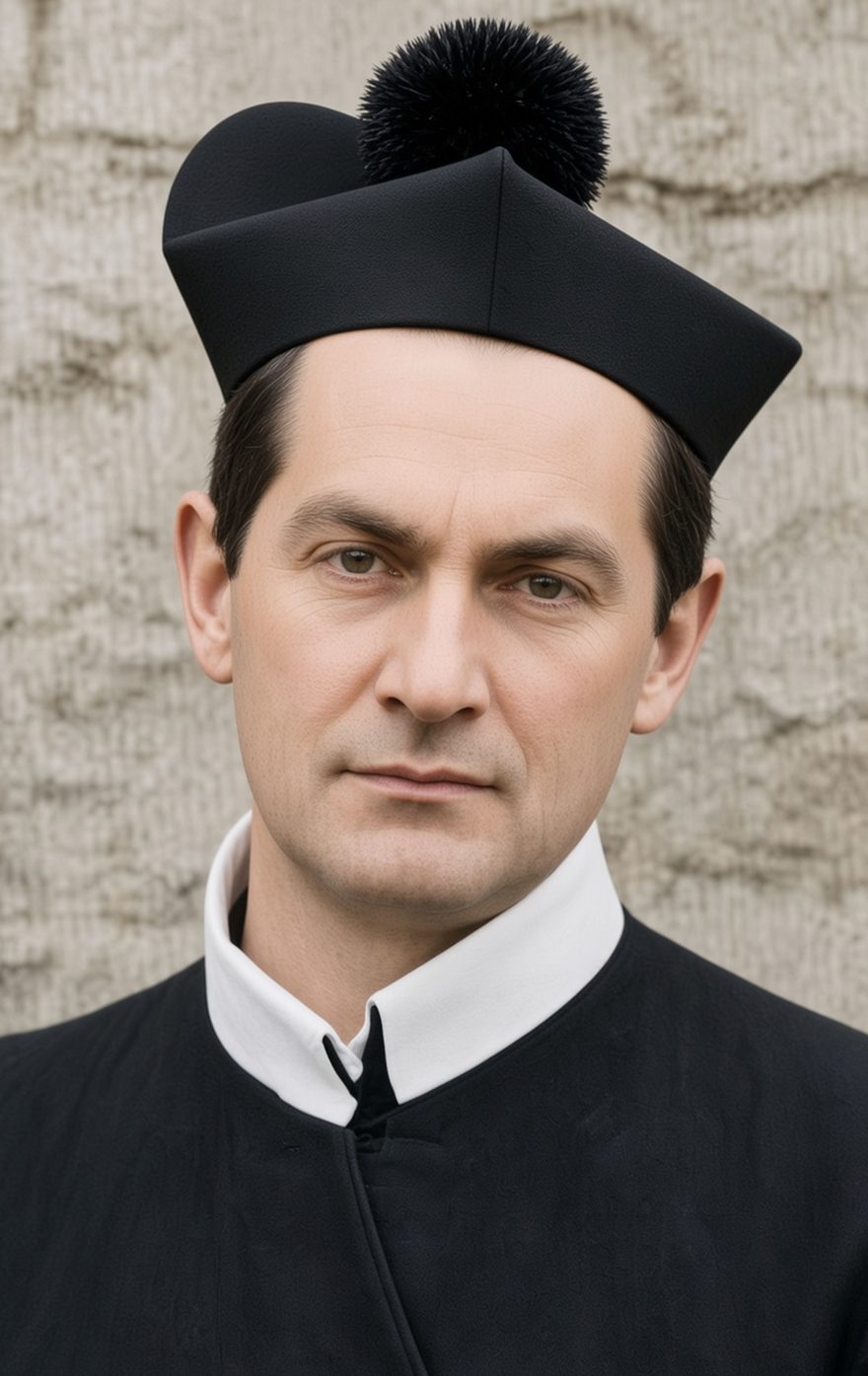
Father John Creagh is remembered in Ireland for one thing, and he did it. He preached against the Jews of Limerick and started a boycott that broke part of a small, poor community.
The rest of his life was spent mostly on the far side of the world, and parts of it were admirable. Neither half cancels the other. This is both halves, kept to what the record shows.
1870. Thomondgate
He was born in Thomondgate, Limerick, on the nineteenth of August 1870. The Christian Brothers taught him. He joined the Redemptorists at fourteen, trained in Liverpool and was ordained at Teignmouth in Devon in September 1895.
1902. Six thousand men
In 1902 he became director of the Arch Confraternity of the Holy Family in Limerick, the Redemptorists' great sodality for the city's working men. It had about six thousand members. Whoever directed it had the ear of a large part of the city every week.

1904. Two sermons
On the eleventh of January 1904 he preached to the confraternity about the city's Jews, some thirty families who lived mostly by peddling and selling on weekly credit. He said they had come to fasten themselves on the people like leeches. He called them the killers of Christ and the allies of the Freemasons, and he told his men to have no more dealings with them.
The ideas were not his own. They were the antisemitism of French Catholic circles in the years of the Dreyfus affair.
On the eighteenth Michael Davitt protested in the Freeman's Journal. Creagh answered from the pulpit that evening. He said his quarrel was with Jewish trading, not the Jewish religion. In the same sermon he denied that he had suggested ritual murder and then gave examples of it as fact.
Charles Emanuel, secretary to the London Committee of Deputies of the British Jews, called that sermon perhaps the grossest insult to the Jewish religion offered in any civilised country in living memory.
1905. Counting the cost
There was violence, though less than the word pogrom suggests. From February to July 1904 there were forty to fifty reported incidents, mostly stones, mud and jostling. The rabbi, Elias Levin, was stoned twice. A youth called Rahilly was jailed for one of the stonings and was welcomed home when he came out. Nobody was killed.
The boycott did the real damage. Customers stopped paying, and the traders had nothing else to live on. In March 1905 the police reported on it. Of thirty two Jewish families in the city in January 1904, eight had gone, five of them because of the boycott. Of the twenty six who stayed, only eight were in good circumstances. Thirteen of them were still there in 1911.
The story says he drove the Jews out of Limerick. The record says he drove some out at once and left most of the rest poorer, and that a smaller community lived on in the city for another twenty years.
1906. Out of Limerick
He stayed in Limerick until April 1906, and the boycott, in some form, lasted as long as he did. His order then sent him to Belfast and on to the Philippines.
Soon after he reached the Redemptorist mission at Opon, on Cebu, he had a breakdown. He spent a year recovering and was then sent to Wellington in New Zealand.
1916. The Kimberleys
In 1914 he became rector of the Redemptorist house in Perth. In May 1916 he was appointed to the Vicariate Apostolic of the Kimberley, in the far north west of Australia, and he was based at the pearling port of Broome.
The appointment was political. The missionaries there were German Pallottines, and in wartime there were complaints about enemy aliens. The Archbishop of Perth wanted the missions kept open. Creagh was put over them, called the Germans his confreres, and the missions stayed open.
1917. Lombadina
In 1917 the Lombadina mission was in danger of being closed. It was saved when his brother Monkton and a Mr Freney bought the land and made it over to him.
He spoke out against the exploitation of the pearling crews and pressed for money for the hospital at Broome. The Dictionary of Irish Biography calls his zeal for converts both crude and successful. He also gave evidence in favour of a drover accused of murdering an Aboriginal farmhand.
1923. Parishes
He left the Kimberleys at the end of 1923. He was a parish priest at Bunbury and then at Pennant Hills. At Waratah he had a stroke.
1947. The obituary
He died in Wellington on the twenty fourth of January 1947.
The story says his obituaries left Limerick out. One did not. It called his four years as director of the confraternity his first great work, and said a book could be written about them, telling of wrecked homes restored and of unscrupulous commercial men challenged and defeated.
It does not name the commercial men.